
Unclench Your Worries: A Guide through Progressive Muscle Relaxation

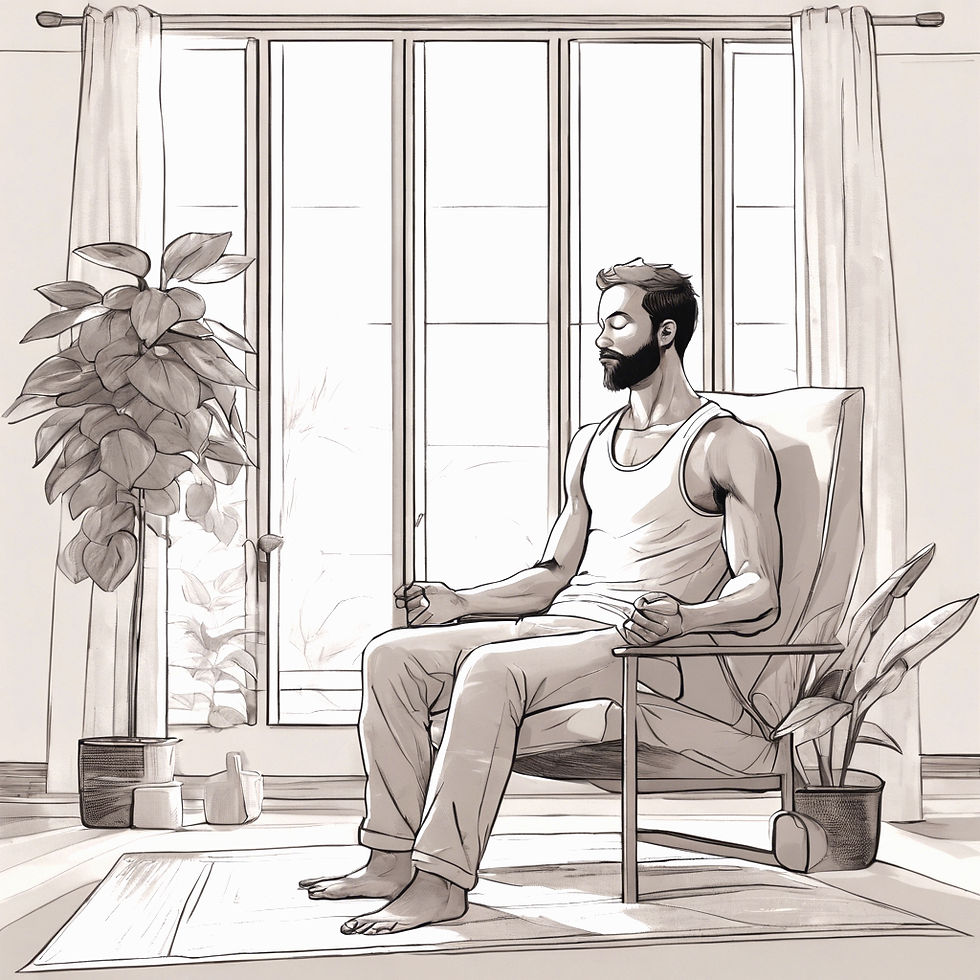
Ever noticed how your shoulders creep up towards your ears when you're stressed? Or how your jaw clenches when facing a deadline? Our bodies hold onto tension, reflecting the anxieties and pressures of our lives. Progressive Muscle Relaxation (PMR) offers a powerful technique to release this physical tension, leading to a calmer mind and a more relaxed you.
What is PMR?
Developed by Dr. Edmund Jacobson in the 1920s, PMR is a simple yet effective technique that involves systematically tensing and relaxing different muscle groups in the body. By consciously creating and releasing tension, you gain a heightened awareness of physical sensations and learn to identify and let go of stress held within your muscles.
How PMR Works
The science behind PMR lies in the mind-body connection. When we experience stress, our sympathetic nervous system kicks into gear, triggering the "fight-or-flight" response. This leads to muscle tension, increased heart rate, and rapid breathing. PMR counteracts this by activating the parasympathetic nervous system, responsible for the "rest-and-digest" response.
Research has shown that PMR can:
Reduce anxiety: A study published in the Journal of Behavior Therapy and Experimental Psychiatry found that PMR significantly reduced anxiety symptoms in participants (Bernstein & Borkovec, 1973).
Improve sleep: By promoting relaxation, PMR can help improve sleep quality and reduce insomnia (Lichstein & Johnson, 2012).
Lower blood pressure: PMR has been shown to lower blood pressure in individuals with hypertension (Jacobson, 1938).
Manage chronic pain: Studies suggest that PMR can be helpful in managing chronic pain conditions such as headaches and back pain (McCallie, Blum, & Hood, 2006).
The PMR Process: A Step-by-Step Guide
Find a comfortable position: Sit or lie down in a quiet space.
Focus on your breath: Take a few deep breaths to center yourself.
Start with your feet: Tense the muscles in your feet for 5-10 seconds, then release and notice the feeling of relaxation.
Move upwards: Gradually work your way up your body, tensing and relaxing different muscle groups (calves, thighs, abdomen, chest, shoulders, arms, hands, and face).
Repeat: You can repeat the process a few times, focusing on areas where you hold the most tension.
PMR Highlights:
Easy to learn: PMR requires no special equipment or training.
Can be done anywhere: You can practice PMR at home, at work, or even on the go.
No side effects: Unlike medication, PMR has no known side effects.
Empowering: PMR gives you a tool to actively manage your stress and anxiety.
Drawbacks:
Time commitment: PMR can take 15-20 minutes to complete.
May not be suitable for everyone: Individuals with certain medical conditions may need to consult with a healthcare professional before trying PMR.
Progressive Muscle Relaxation is a valuable tool for anyone seeking to manage stress, reduce anxiety, and cultivate a sense of calm. By taking the time to connect with your body and release tension, you can unlock a deeper sense of well-being and inner peace.
References:
Bernstein, D. A., & Borkovec, T. D. (1973). Progressive relaxation training: A manual for the helping professions. Champaign, IL: Research Press.
Jacobson, E. (1938). Progressive relaxation. Chicago: University of Chicago Press.
Lichstein, K. L., & Johnson, R. S. (2012). Handbook of insomnia. New York: Springer.
McCallie, M. S., Blum, C. M., & Hood, C. J. (2006). Progressive muscle relaxation. Journal of Human Behavior in the Social Environment, 13(3), 51-66.